
Picture this. It’s 6 p.m. on the night of a 200-guest wedding reception. The kitchen thinks dinner starts at 7 p.m. The setup crew built the room for a plated meal. But the client booked a buffet. Nobody is wrong on purpose. Everyone just worked from a different memory of the same conversation.
This is the exact kind of disaster that a banquet event order is designed to avoid.
If you coordinate events at hotels, restaurants, or other venues, you may be familiar with the term, and you may have signed one. But what really is a banquet event order, and what includes a good one? This guide aims to answer your questions regarding banquet event orders in an easy-to-understand way and help your events go smoothly.
What Is a Banquet Event Order (BEO)?
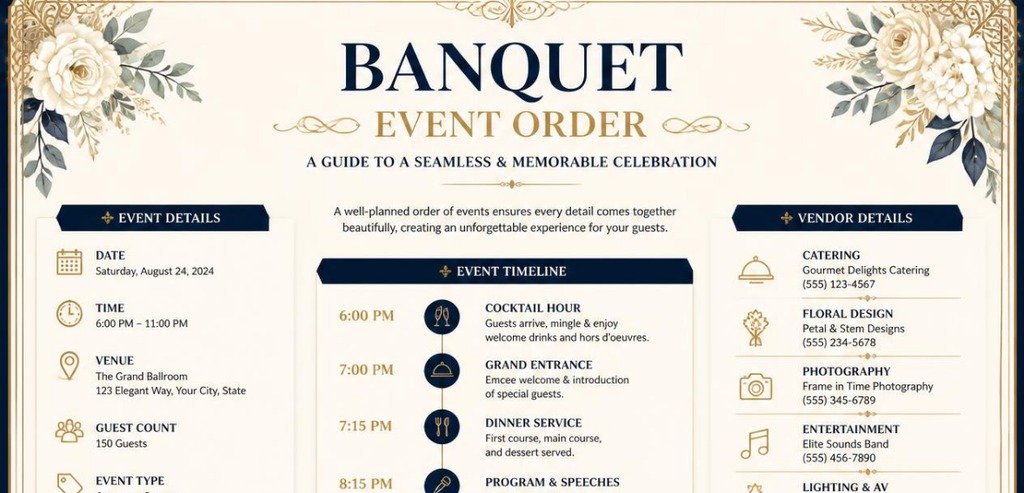
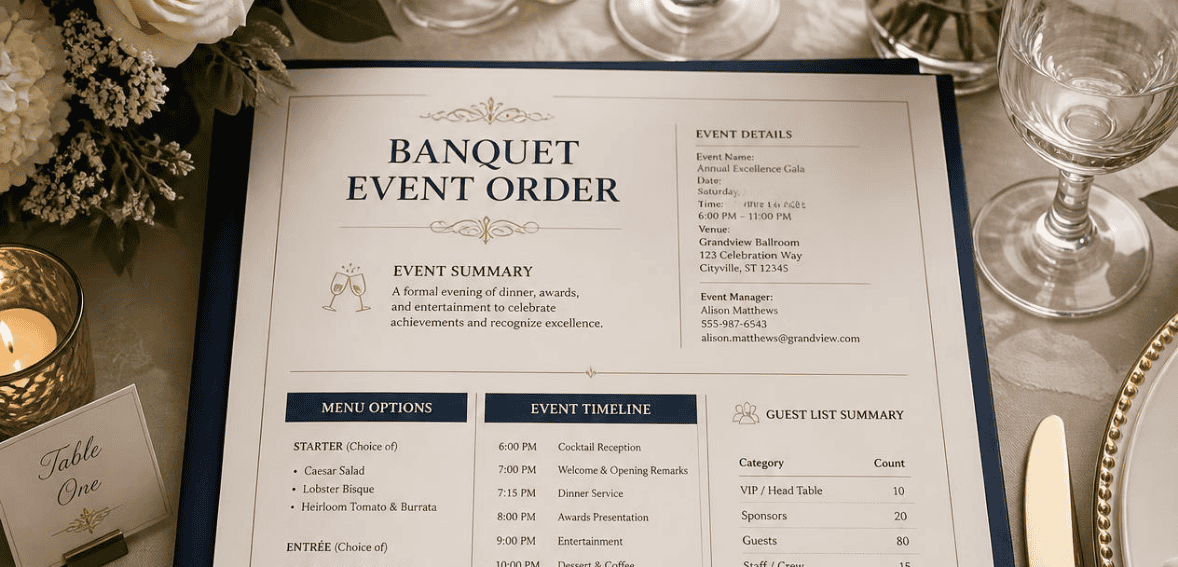
A banquet event order is a detailed document that spells out every element of an event held at a venue. People in the industry usually shorten it to “BEO.” The word “banquet” here just means “event.” It doesn’t only apply to formal dinners.
You can consider the BEO to be the master plan for an event. Everything from the fine details to the big picture can be found in the BEO. It includes the layout of the rooms, the menu, the timing, the price, the staff, any requests, and all of the details and terms that pertain to the event.
A signed BEO is a contract. A BEO provides a guarantee to the client on the services and the scope of work that the venue has agreed to. A signed BEO converts a proposal into work that the venue is obligated to provide.
A BEO provides a singular and centralized plan for the entire event staff from chefs to servers to bartenders to AV to tech to the crew that sets up the event. A BEO eliminates the planning gaps that lead to problems and unifies staff in the plan for the event.
Why the Banquet Event Order Matters
Events have a lot of moving parts. Sales books the room. Catering plans the food. Operations arranges the space. On-site staff pull it all together on the day. When those teams work from different notes, execution suffers.
The banquet event order (BEO) helps everyone understand what to expect when the event opens. Staff will no longer have to worry about email and text message chains. Now there will be one document that will help everyone make sense of the event order. It will reduce the frantic rush of last-minute adjustments and mistakes.
From the perspective of the business, a successful event equals a happy client. A happy client goes on to provide a five-star review and helps bring in more business. In contrast, an unhappy client provides a negative review and reflects badly on the business. The BEO helps maintain a smooth event order and protect your revenue.
The BEO also provides legal protection. The signed BEO helps protect a business and its clients by providing clear answers contractually. Pricing and headcount questions will go away with the signed BEO.
Who Creates and Uses a BEO?
Typically, either the sales or catering staff draft the banquet event order (BEO) and do so in collaboration with the client. The client has the final say in the event vision. To draft a useful and practical BEO, staff from operations and the kitchen as well as other relevant departments, offer their input.
When the BEO is completed, it is distributed to a number of staff and departments. Catering and kitchen staff read the BEO to determine the event menu and the timing of the event. The bar staff determines the beverage service. The serving staff learn the meal service. The AV staff learn the order and the setup staff learn the build. The front-desk staff and the security staff also refer to the BEO. Essentially, all staff who have a function at the event refer to the BEO.
There is often a detail that confuses new staff. Each event or function has a separate BEO. A single wedding, for example, may have a rehearsal dinner, a wedding ceremony, a wedding reception, and a farewell brunch. Each of those events may have several separate BEOs. A single conference may have multiple BEOs for each session.
What Should a Banquet Event Order Include?
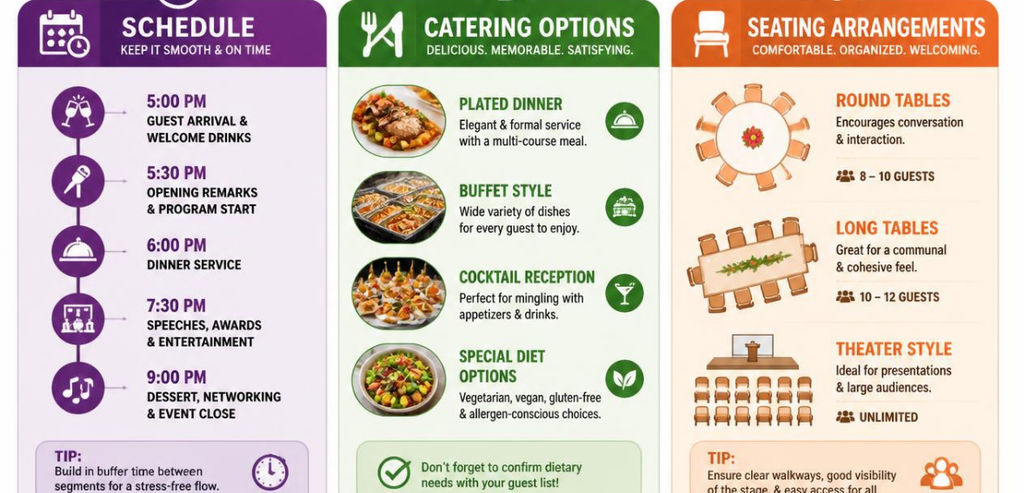
Now to the heart of the matter. A great BEO leaves nothing to guesswork. It should be so complete that a staff member could execute the event using only that page. Here’s what belongs inside.
Event and Client Information
Include event name, date, and the unique BEO number in tracking. Also, list client contact information, including the client’s full name, email address, cell phone, and office phone. Include venue contact. Also include guaranteed guest count.
Timeline and Schedule
Timing drives everything else on the day. The BEO should map out the full schedule from start to finish. List when the room needs to be ready, when guests arrive, and when each phase begins. Cocktail hour, dinner service, speeches, and teardown all get a time. A clear timeline keeps the kitchen, the bar, and the setup crew perfectly in sync.
Room Setup and Floor Plan
Use the exact name of the room and describe the layout and how many tables and chairs are arranged. Include the major pieces of equipment and furniture. Elaborate on the décor. There will be a diagram for unconventional layouts, but still describe the layout. A basic floor plan will demonstrate the arrangement and reduce setup time. This includes head tables and registration desks, as well as stages and dance floors.
Food and Beverage Details
The full menu should be specified if it is available. All food items need to be listed. You should include all courses served, including drinks. State if there are kids’ meals. State applicable dietary needs or restrictions. State the type and style of meal service (plated, buffet, or family style) and the style of beverage service (open bar, cash bar, or wine served with the meal).
Audiovisual and Technical Needs
Modern events lean on technology. Document every AV requirement clearly. Microphones, projectors, screens, speakers, and lighting all get listed. Note who supplies each item. Sometimes the venue handles AV in-house. Other times a third party manages it under a separate contract. Either way, the BEO should make the arrangement obvious so nothing goes dark mid-speech.
Vendors, Staffing, and Special Requests
Outside vendors require coordination. Create a schedule for flower deliveries, photography sessions, entertainment, and equipment rentals. Describe your staffing needs; for example, how many servers and bartenders are required for the event? Once these needs are documented, note any special requests by the client. These requests can include surprise cake reveals, centerpieces, or any other special requests that can be important to the client and create an impression.
Pricing, Billing, and Terms
The final sections cover payment and terms. Price each component to show the client detailed costs. Show the cost for each component, including service charges, tips, and taxes. Include the deposit, the payment plan, and the method of payment. Lastly, include the terms and conditions and a place for each party to sign with their title and date. Keep in mind that the document will not be a formal BEO until both parties sign.
How BEO Software Streamlines the Process
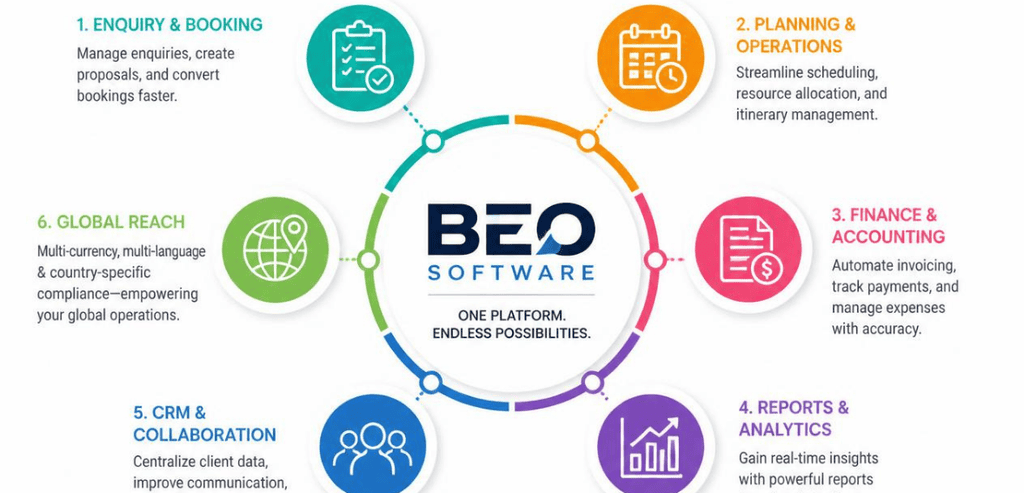
Building every order by hand is slow and error-prone. That’s why many venues now use sales and catering software. These tools store menus, pricing, and room layouts, then plug them into templates automatically. Updates sync across departments in real time. Several industry providers lead this space.
Cvent
Cvent is an event management software solution for venues and planners. Cvent’s software helps centralize all event details and helps distribute the most current order to all stakeholders. This shared order helps align the kitchen, service, and AV staff from the booking and through all execution.
Amadeus Hospitality
Amadeus Hospitality’s sales and catering solutions are customized for hotels and larger venues. Its BEO tools automate the crafting of documents and enhance interactions among the culinary, sales, and events teams. This type of automation eliminates tedious manual effort and diminishes the chances of expensive and unexpected issues arising at the last minute.
SiteMinder
SiteMinder is a hotel event management platform that assists properties in generating and managing event business. As part of SiteMinder’s resources, BEO templates and event booking workflows streamline complicated bookings. These resources allow events to be managed more professionally by mid-sized hotels.
Best Practices for Creating an Effective BEO
An effective template is only the initial component. How you put it into practice is what matters most. A few days prior to the event, distribute the BEO packet to the corresponding departments. This enables early preparation and the opportunity to raise any queries.
Keep the document active. Clients will change their minds. Numbers may fluctuate. Adjust the BEO for the new changes and redistribute the updated version. It is important that the most recent version is the working document. No one should be working off an outdated version.
Be as specific as necessary. Mistakes occur when instructions are too general. “Nice lighting” is an example of an insufficient instruction for a technician. “Warm uplighting in amber along the north wall” is an example of a sufficient instruction for a technician.
Be sure to incorporate your BEO into your overall operations. Reservations, catering, housekeeping, and billing are connected through the BEO. This system will help your teams have the most accurate data, which aligns with hospitality research showing it can increase guest satisfaction.
Conclusion
So, what is a banquet event order? It’s the single most important document in event execution. It transforms a client’s vision into clear, actionable instructions for every team member. It serves as a contract, a checklist, and a communication hub all at once.
A strong BEO includes complete event and client information, a detailed timeline, room setup, food and beverage plans, AV needs, vendor and staffing notes, and clear pricing and terms. Get those pieces right, and you remove guesswork from the equation.
The payoff is real. Fewer mistakes, calmer staff, happier clients, and more repeat bookings. Whether you rely on a simple template or full-featured software, mastering the banquet event order is one of the highest-leverage skills in event operations. Nail the BEO, and the rest of the event tends to take care of itself.
Frequently Asked Questions (FAQs)
What does BEO stand for?
BEO stands for banquet event order. It’s a document that outlines all the details needed to plan and execute an event at a hotel, restaurant, or venue. The word “banquet” is used broadly to mean any event, not just a formal dinner.
Is a banquet event order a legally binding contract?
Yes. Once both the venue and the client sign it, a BEO usually becomes a legally binding agreement. The client confirms the event details and agrees to the terms. The venue commits to delivering exactly what’s listed. That signed document also helps resolve any disputes quickly.
Who is responsible for creating the BEO?
The venue’s sales or catering team typically creates the banquet event order. They build it together with the client and often loop in operations, kitchen, and AV departments. This collaboration makes sure every detail is both accurate and achievable before the event day.
Can one event have more than one BEO?
Absolutely. Each function within a larger booking usually gets its own BEO. A wedding weekend might have separate orders for the rehearsal dinner, ceremony, reception, and brunch. A multi-day conference can generate one for the keynote and one for each breakout